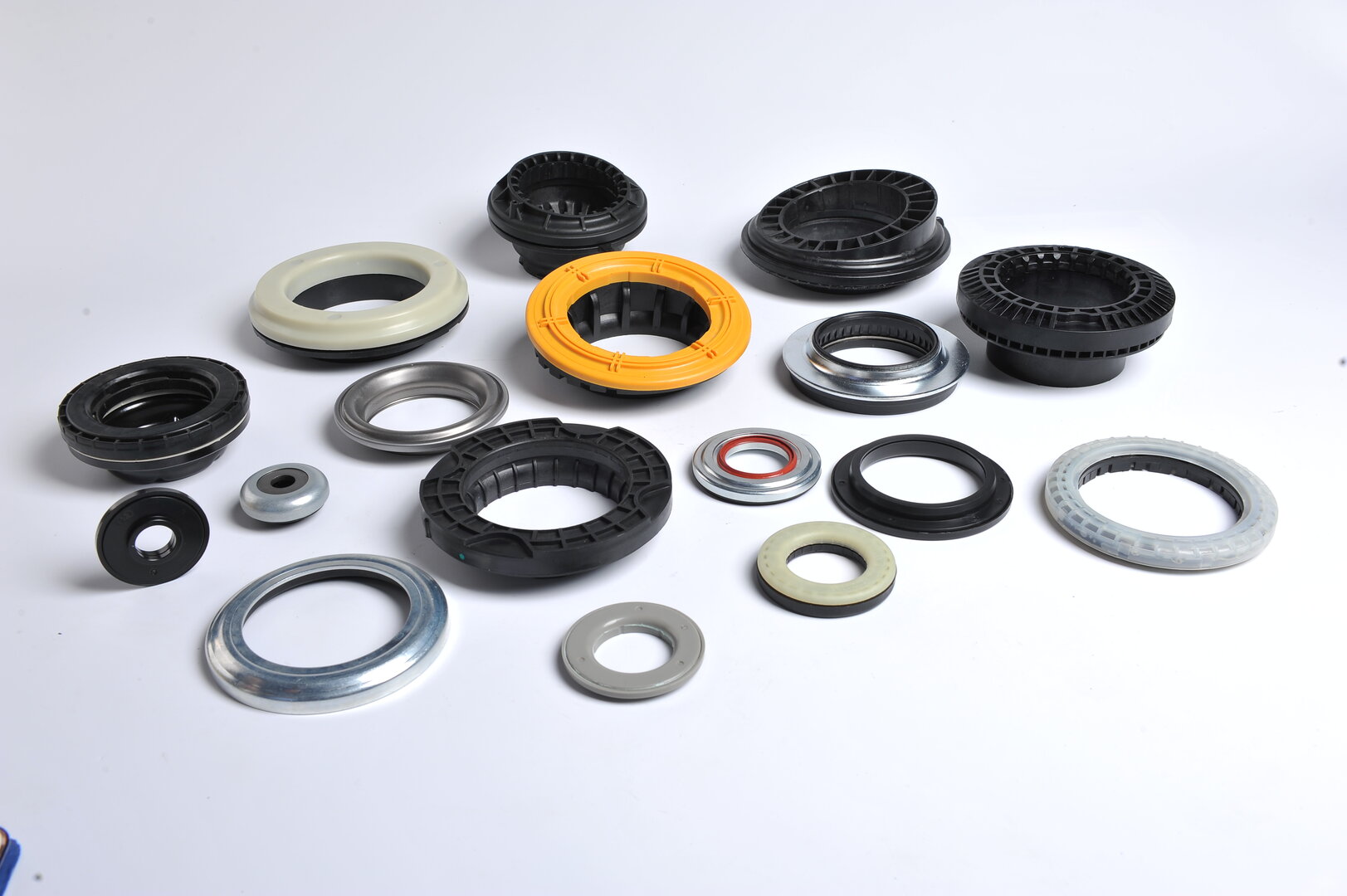
Suspension bushings are among the most critical yet overlooked components in a vehicle’s chassis. These small rubber or polyurethane inserts are responsible for isolating road noise, absorbing vibrations, and maintaining precise suspension geometry. When they fail, the entire driving experience suffers — from vague handling to premature tire wear.
This comprehensive guide covers everything you need to know about automotive suspension bushings: types, materials, failure symptoms, replacement intervals, and a B2B sourcing guide for international buyers.
What Are Suspension Bushings?
Suspension bushings are elastic components that serve as pivots and cushions at the connection points between suspension arms and the vehicle frame or subframe. They allow controlled movement while preventing metal-to-metal contact, reducing noise, vibration, and harshness (NVH).
Key functions of suspension bushings:
- Noise isolation — prevent road noise from transmitting into the cabin
- Vibration damping — absorb high-frequency vibrations from the road surface
- Pivot articulation — allow suspension arms to move through their travel arc
- Alignment retention — maintain proper wheel alignment angles under load
- Impact absorption — cushion shocks from potholes and road debris
Types of Suspension Bushings
1. Control Arm Bushings
Located at both ends of the control arm (upper and lower), these are the most common bushings in any suspension system. They allow the control arm to pivot up and down while maintaining lateral stability. Failure here causes wandering steering and uneven tire wear.
2. Sway Bar Bushings (Stabilizer Bar Bushings)
These bushings mount the sway bar to the chassis and to the end links. They allow the sway bar to rotate slightly while suppressing body roll during cornering. Worn sway bar bushings produce a distinctive clunking noise when driving over uneven surfaces.
3. Strut Rod Bushings
Found on vehicles with strut rod designs (common in older rear-wheel-drive cars), these bushings connect the strut rod to the frame, controlling caster angle and braking stability.
4. Leaf Spring Bushings
Used in leaf spring suspensions (common on trucks and heavy vehicles), these bushings are located at the spring eye attachment points. They must withstand very high loads and harsh operating conditions.
5. Subframe Bushings
These large bushings isolate the entire suspension subframe from the vehicle body. They significantly impact ride comfort and are often replaced to reduce NVH in older vehicles.
Materials Comparison: Rubber vs Polyurethane vs Rubber-Metal Bonded
| Property | Natural Rubber (NR/EPDM) | Polyurethane (PU) | Rubber-Metal Bonded |
|---|---|---|---|
| Durability | Good (3–5 years) | Excellent (5–10 years) | Excellent (5–8 years) |
| Noise Isolation | Excellent | Poor (can transmit noise) | Good |
| Load Capacity | Moderate | High | Very High |
| Cost | Low ($2–$10) | Medium ($8–$30) | Medium ($5–$25) |
| Flexibility | High (comfortable ride) | Low (stiff, sporty feel) | Moderate |
| Chemical Resistance | Poor (oil/ozone degrade) | Excellent | Good |
| Best Application | Passenger cars, comfort-oriented | Performance/racing | OEM/heavy-duty |
B2B Insight: For most OEM replacement applications, rubber-metal bonded bushings offer the best balance of performance, cost, and durability. Polyurethane is recommended only when performance requirements justify the trade-off in ride comfort. Chilong Bearing manufactures all three types to customer specifications.
Symptoms of Worn Bushings
- Clunking or knocking noises when driving over bumps or turning
- Vague or wandering steering — the vehicle does not track straight
- Excessive vibration through the steering wheel or floorpan
- Uneven or rapid tire wear — alignment angles shift due to worn pivots
- Poor handling — excessive body roll or delayed steering response
- Visible cracks, tears, or bulging in the rubber material
Replacement Guide and Intervals
| Bushing Type | Typical Lifespan | Replacement Interval |
|---|---|---|
| Control Arm Bushings | 80,000–120,000 km | Replace with control arms or separately |
| Sway Bar Bushings | 60,000–100,000 km | Replace if clunking or cracked |
| Strut Rod Bushings | 100,000–150,000 km | Replace when alignment cannot be held |
| Leaf Spring Bushings | 80,000–120,000 km | Inspect during regular service |
| Subframe Bushings | 100,000–200,000 km | Replace if excessive NVH present |
Note: Replacement intervals vary significantly based on driving conditions. Vehicles operated on rough roads, in extreme temperatures, or under heavy loads will require more frequent replacement.
B2B Sourcing Guide for International Buyers
When sourcing suspension bushings for OEM or aftermarket distribution, consider the following:
Minimum Order Quantities (MOQ)
Typical MOQs for custom-molded bushings range from 500–2000 units per part number. Standard sizes (common OE cross-references) may be available in lower quantities.
Custom Molding Considerations
- Rubber compound selection — NR, EPDM, CR, or silicone depending on application
- Durometer (hardness) — typically Shore A 55–80 for suspension bushings
- Metal insert specifications — steel or aluminum, with or without anti-corrosion coating
- Bond strength testing — critical for rubber-metal bonded types
- Dimensional tolerances — typically ±0.3 mm for bore diameters
OEM Specification Requirements
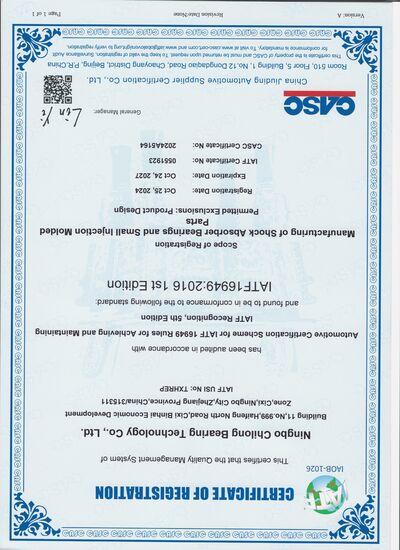
- IATF 16949 or IATF16949 quality certification
- Material data sheets (MDS) and test reports
- Dimensional inspection reports
- Load-deflection curves and fatigue test data
- Salt spray resistance (for metal components)
How Chilong Bearing Manufactures Custom Bushings
Chilong Bearing Technology Co., Ltd. operates a dedicated rubber molding facility within our 5,000 m² manufacturing campus. Our bushing production process includes:
- Compound formulation — custom rubber blends engineered for specific performance requirements
- Metal insert preparation — cleaning, phosphating, and adhesive application for optimal bond strength
- Compression or injection molding — depending on part geometry and production volume
- Post-cure finishing — de-flashing, surface treatment, and inspection
- 100% dimensional inspection — using digital calipers, optical comparators, and CMM for critical dimensions
- Batch testing — hardness, tensile strength, elongation, and bond strength per ISO standards
Our IATF 16949 certified quality management system ensures consistent quality across every production batch.
Frequently Asked Questions
Can I replace bushings without replacing the entire control arm?
Yes, in most cases bushings can be pressed out and replaced individually. However, some manufacturers design control arms with permanently bonded bushings. Aftermarket replacement bushings are widely available for press-in applications.
Are polyurethane bushings better than rubber?
Polyurethane bushings last longer and provide sharper handling response, but they transmit more road noise and vibration to the cabin. For daily-driven passenger vehicles, high-quality rubber bushings offer the best comfort. Polyurethane is preferred for performance and racing applications.
How do I know which bushing material is best for my application?
Consider the vehicle type, expected service life, and performance requirements. OEM-grade rubber-metal bonded bushings work well for most applications. For heavy-duty or extreme-environment applications, specify EPDM or silicone-based compounds for better chemical and temperature resistance.
What certifications should a bushing supplier have?
At minimum, the supplier should be IATF 16949 Certified. For Tier 1 automotive supply, IATF16949 certification is preferred. Request material test reports and dimensional inspection data before placing bulk orders. Chilong Bearing is IATF 16949 Certified and can provide full documentation for all products.
Conclusion
Suspension bushings play a vital role in vehicle safety, comfort, and handling. Whether you are a garage owner looking for reliable replacement parts or a distributor seeking a long-term manufacturing partner, understanding the different types, materials, and quality indicators is essential for making informed decisions.
For custom bushing manufacturing, OEM/ODM projects, or bulk supply inquiries, contact Chilong Bearing Technology for a consultation and quotation.
Need Expert Advice?
Contact our team for professional guidance on your suspension component requirements. We're here to help with OEM/ODM projects, custom manufacturing, and technical consultation.
Contact Our Team