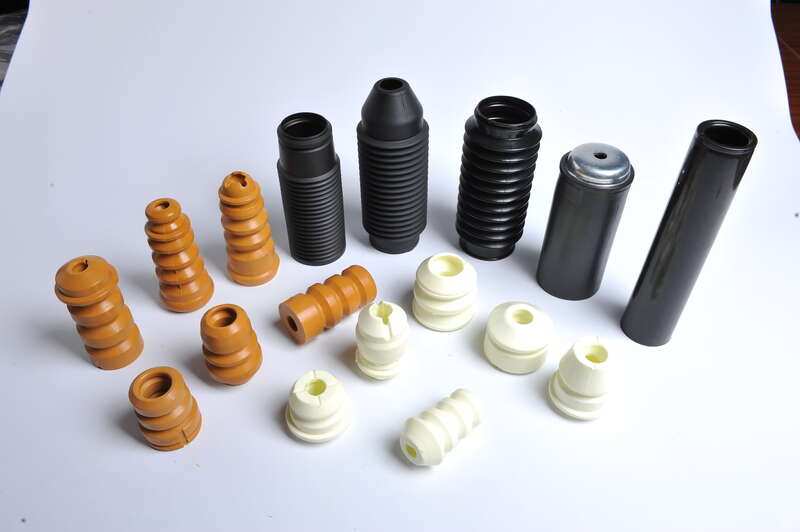
Among the many components in a vehicle's suspension system, the shock absorber dust cover — also known as a dust boot, shock boot, or strut dust cover — is arguably the most undervalued. This simple, flexible sleeve performs a mission-critical function: it keeps contaminants away from the shock absorber's piston rod and seal, directly influencing the shock's service life, performance, and reliability.
In this comprehensive guide, we explain why dust covers matter, what materials and designs are available, how to select the right one for your application, and what quality parameters automotive manufacturers and distributors should evaluate when sourcing dust covers in volume.
Why Dust Covers Matter
1. Preventing Contamination
The primary function of a dust cover is to prevent dirt, road grit, mud, salt, moisture, and other contaminants from reaching the shock absorber's piston rod and rod seal. The rod seal is the most vulnerable point of any shock absorber — if contaminants score or abrade the seal, the shock will leak oil and fail prematurely. In harsh operating environments (construction sites, mining, agricultural fields, snow-belt regions), a missing or damaged dust cover can reduce shock absorber life by 50-80%.
2. Extending Seal Life
The piston rod seal is a precision component designed to maintain a thin oil film for lubrication while preventing external leakage. Even microscopic abrasive particles (5-20 microns) can damage the seal lip, initiating a failure cascade. A quality dust cover acts as a first line of defense, keeping the seal environment clean and extending its functional life to match the vehicle's service interval.
3. NVH Reduction
Dust covers also function as NVH (Noise, Vibration, Harshness) dampers. The flexible material absorbs light vibrations and prevents the strut piston rod from transmitting high-frequency road noise to the vehicle body. Some designs integrate a bump stop section that cushions the suspension at full compression, reducing impact noise.
Types of Dust Covers by Material
The material choice is the most important factor in dust cover performance. Each material offers a different balance of flexibility, durability, chemical resistance, and cost.
| Material | Key Properties | Temperature Range | Relative Cost | Best Applications |
|---|---|---|---|---|
| CR (Chloroprene Rubber) | Good oil & weather resistance, moderate flexibility | -30°C to +90°C | Medium | Standard passenger cars, light trucks |
| TPE (Thermoplastic Elastomer) | Excellent flexibility, recyclable, consistent quality | -40°C to +100°C | Low-Medium | High-volume OE production, eco-conscious projects |
| EPDM | Superior weather, ozone & UV resistance | -45°C to +120°C | Medium | Heavy exposure to sun, heat, outdoor use |
| PU (Polyurethane) | Highest tensile strength, tear & abrasion resistance | -30°C to +80°C | High | Heavy-duty, off-road, commercial vehicles |
CR (Chloroprene Rubber)
CR, commonly known by the brand name Neoprene, has long been a standard material for dust covers. It offers a balanced combination of flexibility, oil resistance, and weather resistance at a moderate cost. CR performs well in most automotive environments but can degrade over time under continuous UV exposure or extreme temperatures. It remains a popular choice for mid-range passenger cars and light commercial vehicles.
TPE (Thermoplastic Elastomer)
TPE is becoming increasingly popular in OEM applications due to its excellent flexibility across a wide temperature range, consistent dimensional quality from injection molding, and full recyclability. TPE dust covers maintain their flexibility down to -40°C without becoming brittle, making them ideal for cold-climate markets. The injection molding process also allows tighter tolerances and more complex geometries than compression-molded rubber.
EPDM
EPDM (ethylene propylene diene monomer) rubber is the material of choice for applications requiring superior weather and ozone resistance. EPDM has excellent resistance to sunlight, heat aging, and ozone cracking, making it ideal for vehicles operating in hot, sunny climates. However, EPDM has poor oil resistance compared to CR, so it is not recommended for applications where the dust cover may contact petroleum-based fluids.
PU (Polyurethane)
Polyurethane dust covers are the premium choice for heavy-duty applications. PU offers the highest tensile strength (up to 40 MPa), exceptional tear resistance, and outstanding abrasion resistance. A quality PU dust cover can outlast the shock absorber itself. The trade-off is higher cost and a narrower temperature range. PU is common in off-road vehicles, commercial trucks, and agricultural machinery where exposure to rocks, gravel, and debris is frequent.
Types of Dust Covers by Design
1Bellows Type (Convoluted)
The most common design, featuring a series of accordion-like folds that allow the cover to compress and extend with the shock absorber's stroke. The folds create channels that trap and divert contaminants away from the seal area. Bellows covers are available in one-piece and two-piece (split) configurations. The one-piece design offers better sealing at the top, while two-piece designs are easier to install on pre-assembled struts.
2Telescopic Type
A smooth, cylindrical sleeve that slides over itself like a telescope. Telescopic dust covers provide excellent contaminant exclusion with minimal surface area for debris accumulation. They are more rigid than bellows types and offer better protection against large debris impact. Common in heavy-duty and off-road applications where ruggedness is prioritized over packaging space.
3Boot with Integrated Bumper
A combined dust cover and bump stop in a single, over-molded component. The upper section functions as a progressive-rate jounce bumper that cushions the suspension at full compression, while the lower section protects the piston rod. This design reduces parts count, simplifies assembly, and eliminates the risk of the bumper shifting or separating from the dust cover during operation. Increasingly used in modern vehicle platforms where packaging space is limited.
Key Quality Parameters for Buyers
When sourcing dust covers for OEM or aftermarket distribution, these quality parameters should be evaluated:
| Parameter | Standard Requirement | Premium Requirement | Test Method |
|---|---|---|---|
| Tensile Strength | > 8 MPa | > 15 MPa | ASTM D412 |
| Tear Resistance | > 20 kN/m | > 40 kN/m | ASTM D624 |
| Elongation at Break | > 300% | > 450% | ASTM D412 |
| Operating Temperature | -30°C to +90°C | -45°C to +120°C | Thermal chamber |
| Ozone Resistance | No cracks after 72 hrs | No cracks after 168 hrs | ASTM D1149 (50 pphm) |
| Cold Flexibility | No cracks at -30°C | No cracks at -45°C | ASTM D2137 |
| Compression Set | < 40% | < 25% | ASTM D395 |
| Dimensional Tolerance | ±0.5 mm | ±0.2 mm | Go/No-go gauge |
When to Replace Dust Covers
Unlike some suspension components with scheduled replacement intervals, dust covers should be replaced whenever visible damage is present. Key indicators include:
- Visible cracking or dry rot: Surface cracks in the rubber or TPE indicate material degradation. Small cracks will quickly propagate under continued flexing.
- Tearing or missing sections: Any perforation in the dust cover compromises its sealing function. Even a small tear allows contaminants to enter.
- Detachment from mounting points: If the cover has slipped off its mounting ring or no longer seals at the top or bottom end.
- Excessive hardening: A cover that has become stiff and brittle has lost its flexibility and will crack under normal suspension movement.
- Contamination visible on the piston rod: If dirt or mud is visible on the shock rod, the dust cover is failing (or missing).
Best practice: replace dust covers whenever shock absorbers are replaced, or at minimum, inspect them at every 20,000 km service interval.
Installation Considerations
Proper installation is critical to dust cover performance:
- Ensure correct orientation: Bellows covers must be oriented so folds collapse in the correct direction. Most covers have a clearly marked top end.
- Use the correct retaining method: Dust covers may be retained by snap rings, cable ties, integrated clips, or press-fit designs. Using the specified retention method prevents slippage.
- Lubricate sparingly: A light application of silicone grease at the upper seal point where the cover contacts the piston rod reduces friction and wear. Avoid petroleum-based lubricants that can degrade rubber.
- Inspect after installation: Compress and extend the suspension manually to verify the cover moves freely without binding, pinching, or contacting adjacent components.
- Replace in pairs: Like most suspension components, dust covers should be replaced on both sides of an axle simultaneously to ensure even protection and service life.
Important: Never cut or trim a dust cover to fit — this compromises its sealing function. Always use the correct part number for the application.
Chilong's Manufacturing of Dust Covers
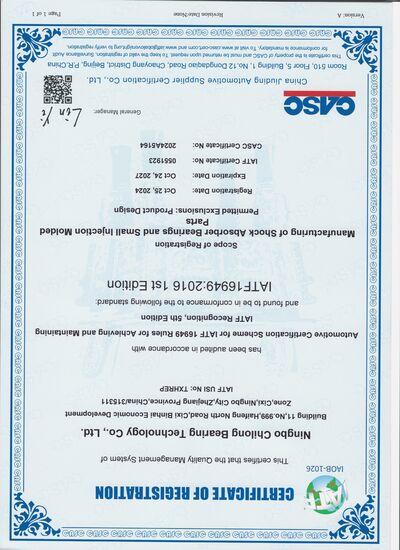
Ningbo Chilong Bearing Technology Co., Ltd. has extensive experience in manufacturing high-quality dust covers for the global automotive market. Our capabilities include:
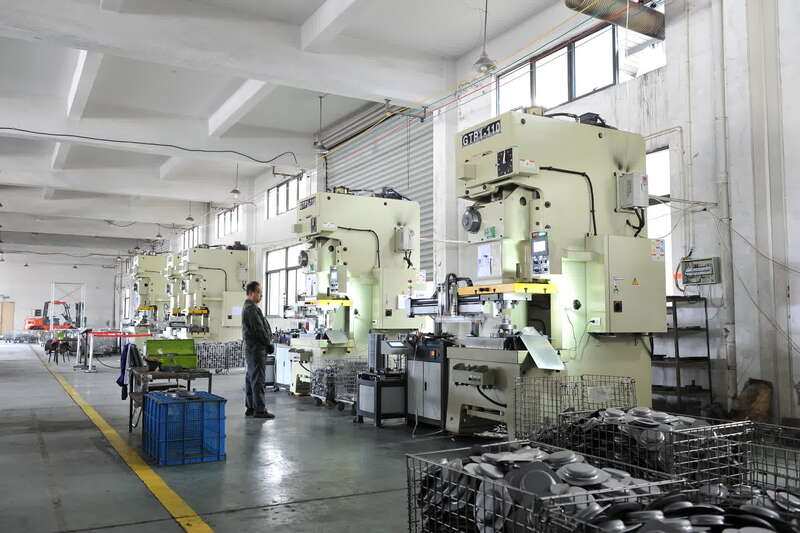
- Injection Molding (TPE): High-speed injection molding for TPE dust covers with consistent wall thickness, no flash, and tight dimensional tolerances. Fully automated with robotic part removal and inspection.
- Compression Molding (CR, EPDM): Precision compression molding for rubber-based covers with proprietary compound formulations optimized for each application. Computer-controlled cure cycles ensure batch-to-batch consistency.
- Over-molding (Integrated Bumper): Multi-stage molding process that bonds the dust cover and bump stop into a single piece. Eliminates secondary assembly and ensures permanent bonding between the two components.
- Material Testing: In-house laboratory tests every batch for tensile strength, tear resistance, hardness, and compression set before production release.
- QC Inspection: 100% visual inspection for surface defects, dimensional verification using go/no-go gauges, and random sample testing for physical properties.
- Customization: Color matching (black, gray, orange, or custom), rib pattern design, material selection based on application, and packaging per customer specification.
Customization Options
Chilong offers extensive customization for OEM and ODM projects:
- Colors: Standard black, or custom RAL colors for brand identification
- Rib design: Number of bellows folds, rib height, and fold spacing can be optimized for stroke length and packaging space
- Integrated bump stop: Bump stop shape, durometer (typically 60-80 Shore A), and progressive rate profile can be tuned for specific ride comfort targets
- End fittings: Custom snap-ring groove profiles, press-fit diameters, or integrated retaining clips
- Material grade: Selection of CR, TPE, EPDM, or PU depending on application and cost targets
- Packaging: Bulk packaging, retail-ready blister packs, or OE-traceable kits with barcode labeling
Looking for custom dust covers for your production line? Chilong provides rapid prototyping and sample delivery within 15-20 working days. Contact our engineering team with your specifications (materials, dimensions, volume) for a competitive quotation.
Frequently Asked Questions
While a vehicle can technically be driven without a dust cover, it is strongly discouraged. Without the protective cover, the shock absorber's piston rod is directly exposed to road grit, salt, moisture, and debris. Contaminants will quickly damage the rod seal, leading to oil leakage and shock failure — typically within 10,000-20,000 km. The cost of replacing a dust cover is a fraction of the cost of replacing a failed shock absorber.
The best material depends on the application. For standard passenger cars in temperate climates, CR rubber offers a good balance of performance and cost. For cold-climate or high-UV environments, TPE or EPDM are better choices. For heavy-duty or off-road use, polyurethane (PU) provides the best durability. When in doubt, TPE is becoming the preferred material for many OEMs due to its wide temperature range, recyclability, and consistent quality from injection molding.
A quality dust cover made from premium materials should last the life of the shock absorber — typically 60,000-100,000 km (about 5-8 years of normal driving). Budget covers made from low-grade rubber may begin cracking within 2-3 years. Environmental factors such as UV exposure, extreme temperatures, and road salt accelerate degradation. Regular inspection during tire rotations helps catch deterioration before the cover fails.
Generally, front and rear dust covers differ in design because front struts have a longer stroke, include a bearing top mount, and may have a different piston rod diameter. Rear shocks typically have shorter stroke and smaller rod diameters. Always verify the correct part number for each position. Some vehicle platforms use the same dust cover on all four corners, but this is the exception rather than the rule.
No — dust covers cannot be reliably repaired. Cracks, tears, or material degradation compromise the cover's sealing function, and repair attempts (tape, adhesive, patches) will fail under the repeated flexing and environmental exposure that the part is designed to withstand. Replacement is the only safe and effective solution. Dust covers are inexpensive components, and replacing them at the first sign of damage is the most cost-effective approach.
Need Expert Advice on Dust Covers?
Our team of suspension specialists can help you select the right dust cover for your application. Contact us for technical support, OEM/ODM inquiries, or bulk pricing.
Contact Our Team